Idle Heroes
- 4.7
- Rating
- 10.00M
- Installs
- Free
- Price

 Analysis by App-foxy
Idle Heroes is the kind of role-playing game I open when I want progress without committing to a long session. Developed by DHGAMES, it puts the focus on building a team of heroes, improving them over time, and sending them into battles that can continue while I am away. That sounds simple, but the game becomes much more interesting once I start deciding which characters deserve resources and which upgrades should wait.
My first impression is that this is not a traditional adventure RPG built around constant movement and exploration. It is closer to a long-term team-management game with battles attached. I make formation choices, strengthen heroes, collect rewards, and return later to see how far the group has advanced. The free entry point makes it easy to try, although optional purchases range from $0.99 to $99.99 per item, so I would approach the shop carefully rather than treating every offer as necessary.
Getting started without losing track of the game
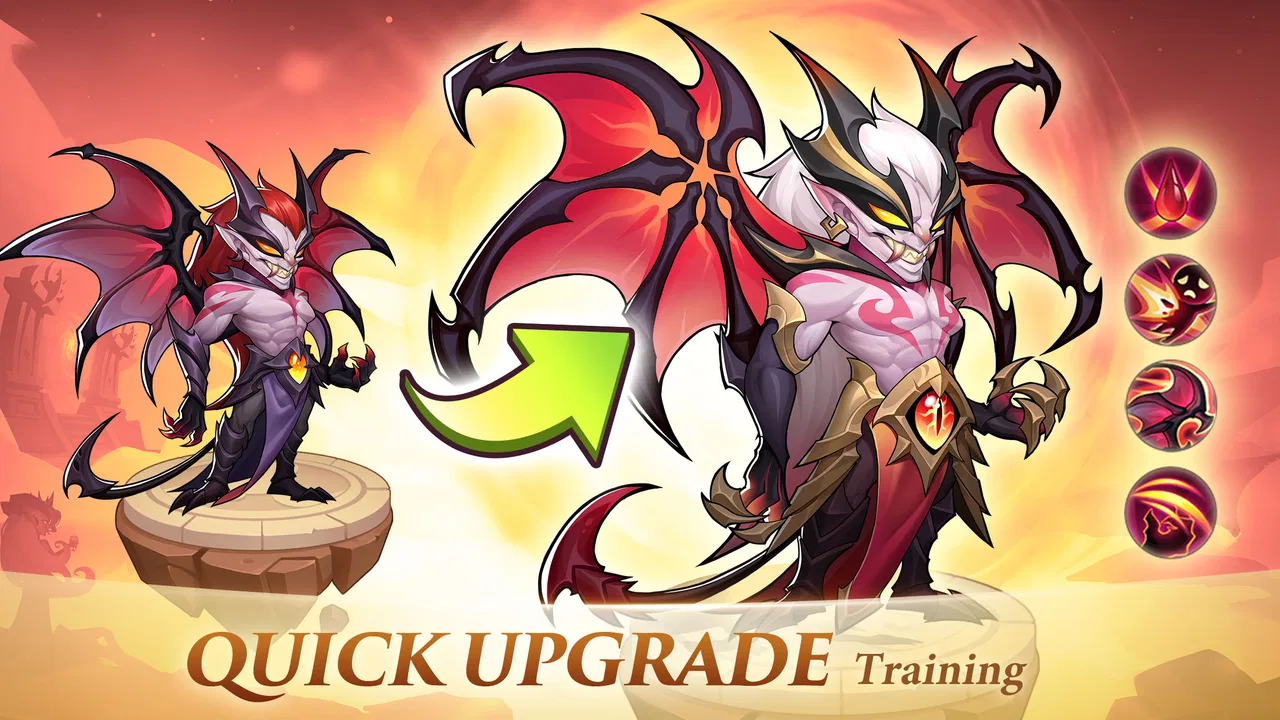
The opening hours can feel busier than the basic idea suggests. There are rewards to collect, menus to inspect, heroes to improve, and several prompts competing for attention. I found that the safest approach is not to spend every resource immediately. Early progress feels satisfying, but the game is designed around gradual decisions, and a quick upgrade can leave me short when a stronger hero or more useful improvement appears.
You May Also Like

 Blood Strike: 2.5 Anniversary
Blood Strike’s Loadouts Turn Every Drop Into a Tactical Gamble
A close look at Blood Strike’s custom loadouts: how fast access to signature weapons reshapes its battle royale rhythm, rewards preparation, and narrows the gap between fights.

 Pandora - Music & Podcasts
Pandora’s Music Is Easy to Start, but Harder to Recover
Pandora’s strength is its low-effort path from a seed to a station. Its weak spot is how much confidence it asks you to place in connection, setup, and quiet recovery.

 8 Ball Pool
 Is Built on Rivalries, Rematches, and Routine
A close look at the rivalries, rematches, shared routines, and unanswered safety questions that turn a quick pool match into a persistent mobile community.

 Samsung Music
’s Quiet Strength Is Playing What You Already Own
Its reach comes less from spectacle than from dependable access to a personal library. That simplicity is both the app’s strongest retention engine and its ceiling.

 AccuWeather: Weather Radar
AccuWeather Review: A Quick, Clear Forecast for Everyday Decisions
For everyday plans, the best forecast is the one you can understand quickly. AccuWeather makes rain timing, radar, and local conditions easy to act on, with a few trade-offs.

 Hill Climb Racing
Why Hill Climb Racing Still Turns Crashes Into One More Run
A tiny car, a bumpy hill and one more upgrade: Hill Climb Racing keeps resurfacing because its simple chaos makes every near-miss feel personal.
More From Our News Desk



One common sticking point is understanding what “idle” actually means here. It does not mean I can ignore the game completely and expect every part of my account to manage itself. The idle element mainly makes waiting productive: I can return to claim progress and use the results to prepare for the next challenge. Team composition, equipment choices, hero development, and battle preparation still need my attention.
I recommend beginning with a short inspection routine. I check the heroes I already own, look at which ones are receiving experience or equipment, review the current battle formation, and then collect available rewards. This prevents a familiar mistake: spending materials on several characters simply because they are available, instead of concentrating on a smaller core team.
The game is available for free and carries an Everyone 10+ content rating. It requires Android 5.0 or later, which makes it approachable on a broad range of Android devices. Still, compatibility on paper does not guarantee a perfect experience on every phone. If the game stutters, closes, or takes unusually long to load, I first treat that as a setup issue rather than immediately blaming the account or the game itself.
Checks I make before troubleshooting progress
I start with the basics: a stable connection, enough free storage, and a current version of the game from the official app store. Idle progress depends on the app being able to connect and synchronize, so switching repeatedly between weak Wi-Fi and mobile data can make the experience confusing. I also avoid opening the game while many other demanding apps are running, especially on an older device.
Restarting the phone is an unglamorous but useful check. It clears temporary problems that can affect loading, touch response, or background activity. If the game opens normally after a restart, I continue playing for a while before changing anything more drastic. That gives me a better idea of whether the problem was temporary or repeatable.
I am cautious with clearing app data. Clearing a cache can sometimes help with damaged temporary files, but clearing stored data can create a fresh local session and may require account recovery. Before doing anything that removes local information, I make sure I understand how my progress is connected and that I can sign back in. This is especially important in a game where progress accumulates over many short visits.
Notifications and background behavior can also affect expectations. If I close the game and return later without seeing the result I expected, I check the in-game reward area and the current battle screen rather than assuming the session failed. The practical lesson is simple: confirm the game state inside the app before repeating an action. Tapping repeatedly during a slow connection can make it harder to tell what was actually accepted.
Recovering a stalled session or confusing battle result
When a screen appears stuck, I give it a moment before force-closing the app. With any online game, a delayed response can mean the action is still being processed. If nothing changes, I close and reopen the game, then check whether the reward, battle result, or upgrade is already reflected. Repeating the same purchase or upgrade immediately is not a good recovery method because it can create unnecessary confusion.
If the game loads but my team suddenly performs poorly, I look for changes in the formation and equipment before rebuilding everything. A hero may be underdeveloped compared with the rest of the group, or a previous adjustment may have placed a less suitable character in a key position. I prefer changing one thing at a time, running another battle, and observing the result. That turns trial and error into a useful test instead of a complete reset.
Resource recovery is another area where patience matters. I do not assume that a disappointing battle means I should immediately buy a solution. I first collect available idle rewards, improve the most important members of the team, and revisit the challenge after the group has grown stronger. This is one of the better uses of the game’s waiting-based design: a wall can become a reason to pause rather than a demand for instant spending.
For new players, the most useful workflow is to create a repeatable order of operations. I collect rewards, inspect the team, upgrade only the main group, attempt the next sensible challenge, and then leave the game when there is nothing meaningful to manage. This keeps short sessions focused and reduces the temptation to tap through every menu without knowing why.
How I manage heroes and avoid wasteful upgrades
The main strategic trade-off is breadth versus concentration. It is tempting to develop every hero because each one represents a possible future option. In practice, spreading resources too widely can make the whole roster feel weak. I get better results by establishing a dependable core team first, then experimenting with additional characters once the main group can handle routine content.
I also separate “interesting” from “useful right now.” A hero may look promising but still be a poor investment if the rest of the formation cannot support that choice. Before upgrading, I consider the role the character fills, how the hero fits with the current lineup, and whether the improvement solves a real problem. This is more valuable than chasing every new addition simply because it is new.
Equipment deserves the same restraint. Moving useful gear around can be more effective than upgrading everything at once, particularly when one battle is being lost by a narrow margin. I use the current obstacle as a guide: if the team lacks survival, I focus on the relevant defensive improvement; if damage is the issue, I strengthen the character who can make the biggest difference. This targeted approach saves materials and makes each change easier to evaluate.
A practical everyday scenario shows where the game fits best. If I have ten minutes during a commute or lunch break, I can collect progress, make a formation adjustment, and start the next activity without needing to remember a complicated control scheme. Later, when I have more time, I can compare heroes and decide where the next investment belongs. It works well for fragmented schedules, but it is less satisfying if I want a story-driven session with direct movement and constant interaction.
When the problem is the device, connection, or expectation
Not every interruption is caused by the game itself. A weak signal can make loading look like a frozen screen. Limited storage can cause broader app instability. An older device may run the game but struggle when several apps compete for memory. I check these possibilities before reinstalling, because reinstalling is disruptive and does not solve a poor connection or an overloaded phone.
I also keep expectations realistic about idle games. Returning after a break does not remove the need for decisions. The game can provide accumulated progress, but I still need to decide how to use it. If I want a fully automatic experience with no planning, this may feel more demanding than expected. If I want a game that rewards brief check-ins and long-term preparation, the design makes more sense.
Spending is another possible source of friction. The shop can make progress feel more immediate, but optional purchases are not the same as a requirement to understand the game. I would set a personal limit before browsing offers and avoid buying while frustrated by a difficult stage. A purchase can speed up a decision, but it does not replace learning which heroes and upgrades fit my team.
The large player base gives the game a reassuring sense of familiarity: it has a 4.7 average from around 1.1 million ratings, with more than 10 million installs. Those figures suggest that the idle RPG format has reached a wide audience, but they do not mean every player will enjoy the same pace. Someone who dislikes menus, repeated progression loops, or optional monetization may prefer a more direct RPG with a fixed campaign and fewer long-term systems.
What makes it different from a conventional mobile RPG
Compared with an action RPG, Idle Heroes asks less of my reflexes and more of my planning. I am not steering through every encounter or manually controlling attacks. The satisfaction comes from preparing a roster, checking results, and making the next improvement. That makes it easier to play in short bursts, but it also means the game can feel passive during battles.
Compared with a simple clicker, it offers more meaningful team decisions. I cannot reduce the whole experience to tapping for rewards because hero development and formation choices affect how I approach obstacles. The trade-off is that the number of menus and resources can feel heavier than in a minimalist idle game.
Compared with a story-first role-playing game, the emotional focus is different. I spend more time thinking about account growth and team efficiency than following a carefully paced narrative. Players who want exploration, dialogue, and direct control should look elsewhere. Players who enjoy watching a carefully assembled roster become stronger may find the slower structure rewarding.
One subtle strength is that the game gives me reasons to return without demanding that every visit become a long session. The best routine is not to play constantly; it is to make deliberate adjustments, let progress accumulate, and return when there is a useful decision to make. That rhythm is more enjoyable than treating every notification as an obligation.
Who should try it and who should skip it
I would recommend this game to someone who likes collecting heroes, comparing team choices, and improving an account over time. It is a good match for players who often have only a few minutes available and want progress to continue between sessions. It also suits people who enjoy finding a solution to a difficult stage through better preparation rather than faster controls.
I would be more cautious recommending it to someone who wants a complete experience without waiting, repeated management, or optional purchases. The free download makes the first step easy, but the long-term design asks for patience. Players who prefer a clear beginning and ending may find the ongoing progression less satisfying than a traditional single-player RPG.
Families should also keep the age guidance in mind. The game is rated Everyone 10+, and the presence of in-app purchases means I would review device purchase settings before handing it to a younger player. That is not a reason to avoid the game, but it is a sensible part of setting it up responsibly.
My practical verdict after settling into the routine
Idle Heroes works because it understands the appeal of small, repeatable decisions. I can make progress without sitting through a full adventure, yet I still have enough control over heroes and formations to feel involved. The strongest experience comes from treating it as a patient team-building game, not as an action title that happens to run automatically.
Its friction is real: the opening can be menu-heavy, the progression may feel slow when I hit a wall, and the shop requires self-control. Troubleshooting also benefits from a calm approach. I check the connection, restart when necessary, verify the in-game state, and avoid deleting local data before I know how my progress is secured. Those habits prevent many avoidable problems.
In the end, I think DHGAMES has made a solid choice for players who want a role-playing game that fits around everyday life. I would install it for short sessions, focus resources on a core team, and let the idle systems do their part between visits. It is best enjoyed as a deliberate long-term hobby, not as a game that must be rushed. If that rhythm sounds appealing, Idle Heroes is an easy free game to try; if you need direct combat and a tightly controlled story, a conventional RPG will probably serve you better.
FAQs for Idle Heroes
01What is the main objective of Idle Heroes?
Idle Heroes is a role-playing game where the main objective is to assemble a team of heroes to battle against enemies and progress through various levels. Players must strategically upgrade their heroes and equipment to enhance their team's strength and performance in battles.
02Can I play Idle Heroes offline?
Idle Heroes requires an internet connection to access most of its features. While some basic functionalities might be available offline, for full gameplay—including battling in the arena, guild participation, and receiving updates—a stable internet connection is necessary.
03Are there in-app purchases in Idle Heroes?
Yes, Idle Heroes offers in-app purchases. Players can buy various items, including heroes, gems, and other resources that can enhance gameplay experience. While the game is free to play, these purchases can accelerate progress and provide additional perks.
04How does the idle feature work in Idle Heroes?
The idle feature allows players to earn rewards such as gold, experience, and equipment even when they are not actively playing the game. This means your heroes will continue to battle and gather resources while you're offline, making it easier to progress when you return.
05Is there a multiplayer mode in Idle Heroes?
Yes, Idle Heroes includes multiplayer elements. Players can engage in player-versus-player (PvP) battles in the arena, join guilds to collaborate with others, and participate in various events and challenges that involve competing with players globally.
Pros
- Engaging gameplay with strategic depth.
- Diverse hero collection to enhance play.
- Frequent updates and new content.
- Rewards for daily logins and activities.
- Supports both casual and competitive play.
Cons
- In-game purchases can be pricey.
- Graphics may feel outdated to some users.
- Progress can be slow without spending.
- Limited energy restricts playtime.
- Some events favor pay-to-win players.

Idle Heroes
Gallery